
For many property owners, ceiling light installation feels like one of those tasks that you could probably do yourself — right until you realize you’re knee-deep in wires, balancing on a ladder, and trying to figure out which breaker controls the room you’re working in. Whether you’re renovating a home, modernizing an office, or preparing a property for new tenants, proper lighting impacts usability, safety, and design continuity. There’s more to it than screwing in a bulb.
At Gulf Coast Installations, while we specialize in TV installations and wall mounting throughout Naples and Ft. Myers, FL, our experience extends to detail-focused installations, including the ceiling light installation process that too often gets underestimated. Our trained professionals bring a level of precision that can prevent mishaps and maximize long-term functionality. Call us at (239)-682-1077 to learn more.
Why Ceiling Light Installation Shouldn’t Be an Afterthought
Too often, lighting is considered late in a renovation or construction project. But the ceiling light installation process impacts everything from wiring plans to fixture choices and ceiling design. If not accounted for early, poor lighting placement may lead to unflattering shadows, uneven brightness, or worse—unforeseen rewiring costs.
Most ceiling light installations are more complex than they appear due to structural considerations. Ceiling joists, existing wiring, HVAC ducting, and insulation all impact what kind of fixtures can be used and where.
When working in Naples or Ft. Myers, especially in high-end or older homes, Gulf Coast Installations frequently encounters custom ceiling layouts and inconsistent legacy wiring. Each project requires careful evaluation. No two installations are the same, and assuming otherwise can increase cost, time, and frustration.
Planning the Ideal Ceiling Light Installation
Before any physical work starts, a few critical planning stages ensure the installation goes smoothly and matches your property’s functional goals.
- Fixture Weight Assessment: Not all ceilings support heavy fixtures. Chandelier or pendant lights often need reinforced junction boxes.
- Power Source Evaluation: Is the existing line voltage adequate? Can the dimmer switch support LED fixtures?
- Ceiling Type: Concrete, drywall, plaster, or vaulted ceilings require different mounting hardware and techniques.
- Aesthetic Alignment: Lighting fixtures need to complement furniture placement, architectural features, and purpose of the room.
Each of these details requires attention before drilling the first hole. Mistakes here often result in misaligned fixtures or patch jobs that ruin the ceiling finish.
Choosing the Right Fixture for Your Installation
Ceiling light installation isn’t just about connecting wires. It’s about matching the right fixture with the right environment. In business spaces, flush-mounted LED panels offer uniformity, while in homes, ambient fixtures set a tone for living areas.
Here are a few fixture types to consider:
- Flush Mounts: Ideal for low ceilings.
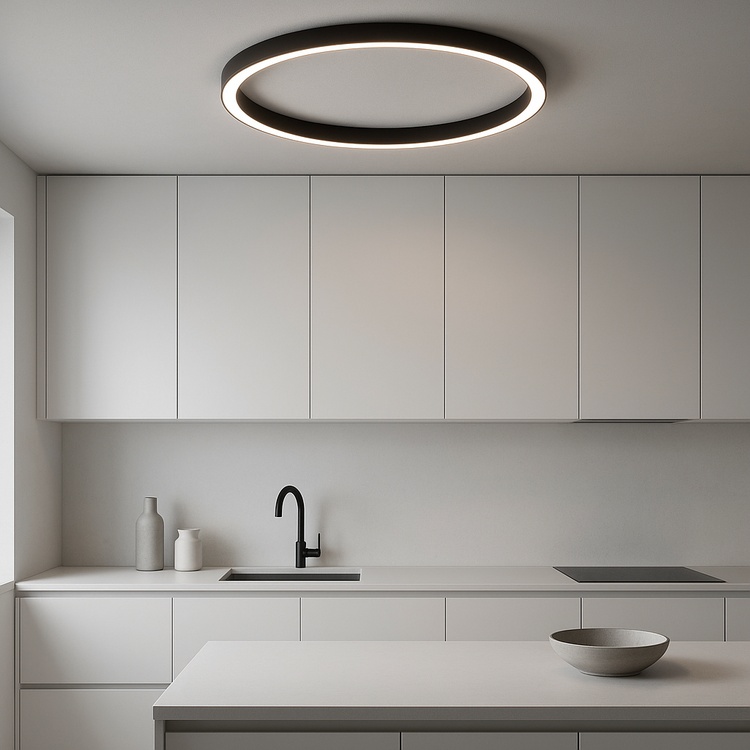
- Recessed Lights: Great for minimalist aesthetics, especially in modern spaces.
- Pendant Lights: Best for kitchen islands and dining tables.
- Track Lighting: Useful for directional lighting or galleries.
- Chandeliers: Statement fixtures suited to foyers and dining rooms.
Always ensure the fixture’s compatibility with your home’s voltage and ceiling support. UL listing or safety certification is non-negotiable for safety and insurance purposes.
Tools and Safety Equipment for Ceiling Light Installation
Even if you’re hiring professionals, knowing the standard tools gives you insight into the complexity behind the service. Here’s what Gulf Coast Installations technicians commonly bring on a ceiling light installation job:
- Voltage tester
- Wire stripper/cutter
- Stud finder
- Drywall saw
- Drill with spade bit
- Ladder or scaffolding
- Safety glasses and gloves
- Non-contact voltage tester
Proper gear isn’t optional—it’s essential. Every technician is trained to isolate circuits and confirm safe disconnects before starting. It’s also one reason why DIY jobs without proper verification sometimes result in flickering lights or tripped breakers.
Step-by-Step Breakdown of a Ceiling Light Installation
While no two jobs are identical, there’s a typical framework followed by our team in Naples and Ft. Myers:
- Power Shutdown: We locate the correct breaker and confirm zero voltage.
- Fixture Removal (if replacing): Safely detach old lighting, note wire colors.
- Box Inspection: Ensure box integrity and that it supports fixture weight.
- Wiring Match: Connect black to black, white to white, ground to green or bare.
- Mount Fixture: Secure to mounting bracket and verify level alignment.
- Bulb Installation: Install specified bulb types with recommended wattage.
- Power Restoration and Testing: Turn breaker back on and check function.
- Finishing Touches: Clean area, touch up ceiling if needed.
This systematic process ensures safety and consistency. It also reduces the risk of callbacks or ceiling damage from rushed or inexperienced work.
Code Compliance and Electrical Permitting
Depending on your municipality, installing a new ceiling light—especially if wiring is added—may require a permit. Gulf Coast Installations handles this process where applicable to stay compliant with city electrical codes in both Naples and Ft. Myers.
Electric code compliance isn’t just bureaucracy. It protects homeowners from hazards and ensures that future upgrades, inspections, or property sales don’t hit unexpected roadblocks.
Troubleshooting Common Installation Issues
Some clients contact us after a DIY ceiling light installation attempt goes wrong. These are some common issues we encounter:
- Flickering Lights: Often caused by poor wire connections or incompatible dimmers.
- Tripping Breakers: May indicate overloading or a short in the wiring.
- Warm Ceiling Boxes: A sign of over-wattage bulbs or insufficient insulation.
- Wobbly Fixtures: Insecure mounting brackets or inappropriate ceiling box.
If you see these issues, cut power at the breaker and contact a licensed professional immediately.
Ceiling Light Installation in High Ceilings and Vaulted Spaces
Installing fixtures in high or sloped ceilings adds complexity. Custom mounts, extension rods, or adjustable angle brackets might be needed. Safety risks increase with height, making professional installation even more critical.
In some Naples homes, we’ve worked with ceilings over 16 feet high. These spaces often require lift equipment or multi-technician teams to ensure the fixture is level and secure. Vaulted ceiling lights must be installed at an angle to cast light downward without skewing the fixture orientation.
Ceiling Light Installation for Smart Homes
Modern properties are increasingly adopting smart lighting systems. Ceiling fixtures now often come with app or voice control, and these integrations demand proper wiring and possibly new switch installations.
Gulf Coast Installs frequently works with smart home platforms like:
- Lutron Caseta
- Philips Hue
- TP-Link Kasa
- Leviton Decora Smart
Installing these requires precise dimmer compatibility, load calculation, and sometimes even neutral wire rerouting—tasks not suited for casual DIY enthusiasts.
Gulf Coast Installations: Not Just For TV Mounting
If you’re in Naples or Ft. Myers, FL and need ceiling light installation handled correctly the first time, Gulf Coast Installations is ready to help. We’re widely recognized for our professional TV installation and mounting services, but our electrical services are built on the same standard of reliability and care.
No job is too big or small. Whether it’s a single flush mount in a condo, or a network of recessed LEDs throughout a luxury estate, our team is trained, insured, and prepared.
Reach out to us at (239)-682-1077 to get started.
Frequently Asked Questions About Ceiling Light Installation
How long does a ceiling light installation typically take?
Most standard installations take about 1 to 2 hours, depending on ceiling height, fixture type, and whether existing wiring is in place.
Can I install a ceiling light where no fixture currently exists?
Yes, but it requires running new wiring from an existing circuit. This should only be performed by a licensed electrician due to safety and code considerations.
What’s the cost range for ceiling light installation?
Depending on complexity, costs range from $100–$500 per fixture. Smart fixtures, high ceilings, or reinforced brackets may increase pricing.
Do I need a permit for ceiling light installation?
In most cases where wiring is modified, a permit may be required. Gulf Coast Installations handles permitting in Naples and Ft. Myers as part of service.
What if I want to install a ceiling fan with lights instead?
Ceiling fans with lights follow a similar installation method but require additional support due to weight and vibration. We offer this service as well.
Let There Be Light—The Right Way
The next time you think about upgrading a room’s ambiance or improving visibility in a workspace, remember that ceiling light installation isn’t just about attaching a fixture. It’s about doing it safely, efficiently, and aesthetically. With Gulf Coast Installations servicing Naples and Ft. Myers, FL, your space can shine—literally and figuratively. From Samsung TV mounting to ceiling light installation, we handle the tasks others shy away from.
For expert help, call (239)-682-1077.