
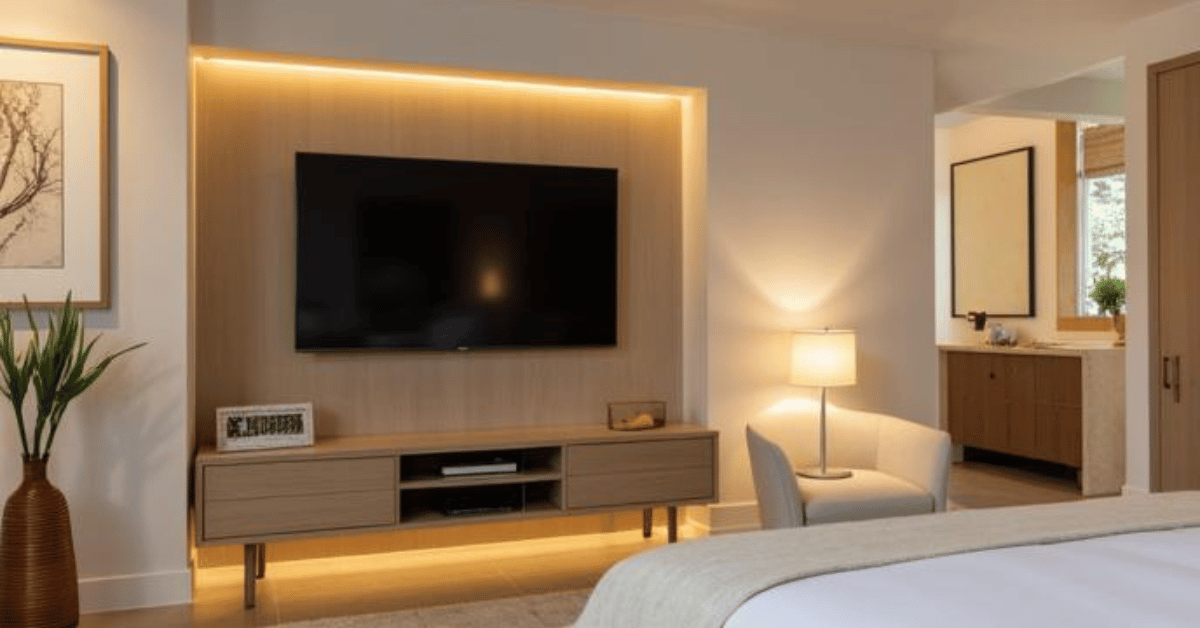
Choosing the best height to mount TV in bedroom sounds simple until you’re halfway through installation, neck tilted, realizing the angle feels off. Many homeowners call Gulf Coast Installations for this reason alone. It’s common, and it’s fixable. Gulf Coast Installations specializes in mounting televisions with precision. Our team handles homes throughout Naples and Ft. Myers, Florida, ensuring viewers enjoy comfortable visuals without eye strain or awkward posture. We can be reached at (239)-682-1077 for scheduling, questions, or bedroom mounting inquiries. No job or TV is too big or too small for Gulf Coast Installations.
A bedroom functions differently than a living room. Lighting, mattress height, viewing distance, and screen size all shape where the display should sit. Mounting slightly higher isn’t always better. Mounting lower doesn’t always feel natural. Rather, a balanced height keeps watching enjoyable. This article covers that — with authentic explanations and human logic rather than stiff instruction — so readers make an informed decision and reduce trial-and-error. For those wanting expert placement, Gulf Coast Installations can complete this with tools, mounts, and careful attention.
Why the Best height to mount TV in bedroom matters
Mounting position influences viewing comfort more dramatically than people expect. A bedroom typically has a more relaxed posture compared to a living room. Many watch while lying down, leaning back, or resting on pillows. When the screen sits too high, viewers angle their necks upward for long periods. Too low, and eye contact with the television drops downward in an unnatural position. Both create strain and reduce image quality. The best height to mount TV in bedroom aligns sight line naturally from the primary viewing position — usually the bed.
Before measuring, determine how you normally watch. Do you sit upright? Recline slightly? Lay flat? The placement varies by posture. This is where homeowners appreciate professional assistance. Gulf Coast Installations evaluates posture, mattress height, wall space, and viewing habits. Installers adjust based on reality, not guesswork. Again, we’re available in Naples and Ft. Myers at (239)-682-1077 for those wanting this handled properly.
Standard measurement recommendations based on eye level
General industry guidance lands around eye-level viewing. In most homes, that positions the center of the screen approximately 42 to 53 inches from the floor — though bedrooms often require slight elevation so the display sits visible above bedding. While watching from a bed, the optimal height may rise to 50–60 inches, depending on mattress thickness and pillow stack. These numbers act as a starting point, not an absolute. The best height to mount TV in bedroom shifts according to personal comfort.
Take a moment to measure. Sit or recline in your usual nighttime position. Ask someone to note where your eyes rest. Mark the wall at that point. The television’s center should align with that spot or just above it. Screens larger than 65 inches may need adjusted height so the top doesn’t tower overhead. This manual approach prevents common mistakes and allows more natural posture.
Factors affecting height placement decisions
Selecting the correct height involves more than a tape measure. Bedrooms differ widely — some have tall headboards, some have footboards blocking line-of-sight, and others include adjustable beds with multiple recline positions. A one-height-fits-all approach rarely delivers ideal results. Below offers a detailed breakdown of factors to examine closely before drilling into drywall.
Mattress height and headboard design
Mattresses today come in various thicknesses. Pillow-top, adjustable base, hybrid foam — all change sitting elevation. Traditional measurement guides assume standard bed height. Many homeowners now own taller setups. A higher sleeping surface means the screen must mount higher than living room standards, yet not too high that viewers crane their neck upward.
Headboards complicate this further. A tall headboard may push the screen up, especially if the TV sits above it. Conversely, a low headboard frees flexibility. Some bedrooms feature statement beds with wood or metal framing. Mounting below that frame can work if it doesn’t restrict viewing. Gulf Coast Installations frequently evaluates these conditions and positions accordingly so nothing feels awkward or blocked.
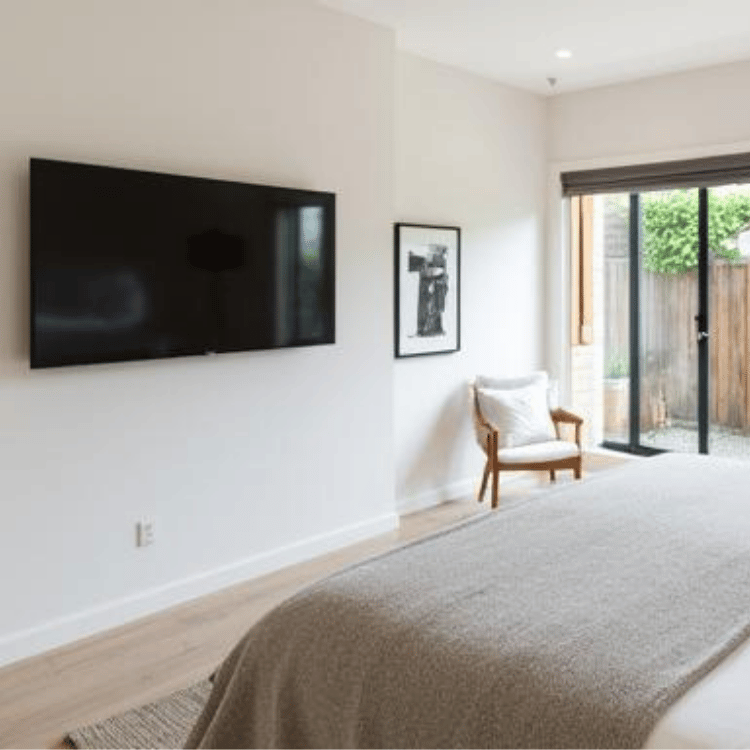
Viewing distance from bed to wall
Distance shapes height preference. When the bed sits farther from the screen, slightly higher placement often improves visibility. If the bed sits close, raising height too much creates a steep viewing angle. Professionals normally calculate distance using a ratio tied to screen size. For example, a 50-inch TV usually performs best when placed 6.5–10 feet away. Larger screens allow further viewing, but extremes become uncomfortable.
Distance influences how your neck angles upward or downward. A balanced placement puts the TV directly ahead, not above eye line drastically. The best height to mount TV in bedroom should keep your gaze forward, minimizing head tilt. If unsure where you fall on the distance spectrum, Gulf Coast Installations can measure and suggest a placement within minutes.
Screen size and mounting flexibility
Bigger screens don’t always mean higher placement. They stretch further vertically. A 75-inch model sits tall on its own even when lower than recommended. A 32-inch set may need higher mounting for proper visibility. Many mounts now offer tilt or swivel capability, granting flexibility. A slight downward tilt compensates for higher elevation, improving comfort.
When choosing a mounting bracket, consider features such as:
- Adjustable tilt range
- Swivel function for angled walls
- Extension arms for recessed headboards
- Weight rating capacity
- Cable management channels
A tilting mount permits elevation without discomfort. Installers frequently pair tilt brackets with bedroom installations. Gulf Coast Installations carries a variety of mounting brackets suited to different screen sizes. We help homeowners select the right hardware for stability and adjustment.
Practical examples of height placement
Real-world cases bring clarity. Below are scenarios describing common bedroom layouts and recommended placement approaches. Each reflects logic many homeowners overlook until installation begins.
Low footboard and standard mattress height
If the footboard sits low and mattress height remains average, mounting near eye-level while seated upright works well. Many place the center of the TV around 50 inches from the floor. This keeps visibility clear whether sitting or leaning. A tilt bracket adds flexibility for laying flat.
In this situation, the TV doesn’t need extreme elevation. The viewer sees the entire display without obstruction. People with this configuration rarely report discomfort if measurement aligns to their seated eye height.
High headboard and taller mattress design
Thicker bedding or an adjustable frame pushes posture upward. Tall mattresses benefit from slightly higher placement; otherwise visibility suffers from the headboard. Centering the screen around 55–60 inches off the floor frequently balances angle and clarity.
Those using reinforced support frames or modern luxury mattresses gain comfort but risk poor sightlines when mounting too low. Raising the screen a few inches ensures easy visibility. Gulf Coast Installations specializes in evaluating these measurements during consultation.
Short viewing distance in compact rooms
Smaller bedrooms often position beds close to the screen. If the mattress sits only five feet from the wall, higher mounting forces viewers to look up sharply. Lower positioning proves better here, typically aligning close to seated eye level. A compact room benefits from careful measuring rather than general guidelines.
With short distance, even slight changes feel noticeable. Moving the TV up or down by only three to four inches may transform comfort. This demonstrates why professional installation support often removes uncertainty.
Wall reinforcement and wiring considerations
Once height is chosen, installation requires attention to wall structure. A bedroom wall might house plumbing, electrical wiring, studs spaced irregularly, or insulation that complicates drilling. To mount securely, installers identify stud placement with a stud finder, then choose anchor hardware rated for the TV’s weight.
Running cables inside the wall offers a clean appearance. Many bedrooms include baseboards and outlets in ideal positions for concealment, though some require extension cabling or power relocation. If the mount includes a tilt mechanism, make sure wires have enough slack for movement. Gulf Coast Installations regularly conceals wiring for a neat finish. Professional work eliminates drooping cords and maintains safety.
Why hire a professional installer instead of mounting alone?
DIY mounting attracts homeowners hoping to save time or cost, but measurement errors happen often. Misjudged height results in re-drilling holes, damaging drywall, and uneven leveling. A professional evaluates room layout, screen weight, and viewing angle with precision. Gulf Coast Installations handles this placement daily, creating smooth setups free of trial-and-error.
Professionals bring:
- Stud location accuracy
- Correct bracket selection
- Wire concealment knowledge
- Proper leveling tools
- Experience in adjusting height on-site
Naples and Ft. Myers residents call us frequently after a DIY attempt goes wrong. Our technicians correct mis-mounts, patch previous holes, and place televisions properly the second time. Calling first prevents the frustration altogether.
FAQs about the Best height to mount TV in bedroom
How high should a bedroom TV be mounted?
Usually between 50 and 60 inches to the screen center, though this varies with mattress height and viewing distance.
Does TV size change the best mounting height?
Yes. Larger screens appear taller naturally. Smaller displays sometimes require elevated placement for visibility.
Should a bedroom TV tilt downward?
Many benefit from downward tilt, especially when screens mount higher than eye level.
Is wall type important?
Absolutely. Drywall, masonry, and plaster each require different anchors and evaluation. Professional installers handle this safely.
Can a TV mount sit below headboard height?
Sometimes. If unobstructed, placing slightly lower creates a more natural viewing angle.
Will mounting affect posture and comfort?
Yes — correct height reduces neck strain and improves long-term viewing.
Finding the Best height to mount TV in bedroom ensures comfort for nightly viewing, weekend streaming, or early morning news. Gulf Coast Installations assists homeowners through this decision with hands-on measurement, stable hardware, and precise alignment. We proudly provide mounting and installation services throughout Naples and Ft. Myers, Florida. Again, we can be reached at (239)-682-1077. No job or television is too large or too small.
When you’re ready to speak with an installer, contact Gulf Coast Installations to discuss placement, schedule service, or request a quote. Balanced installation comes from accurate measuring, and expert help keeps the screen perfectly placed. The best height to mount TV in bedroom elevates more than electronics — it elevates everyday comfort.