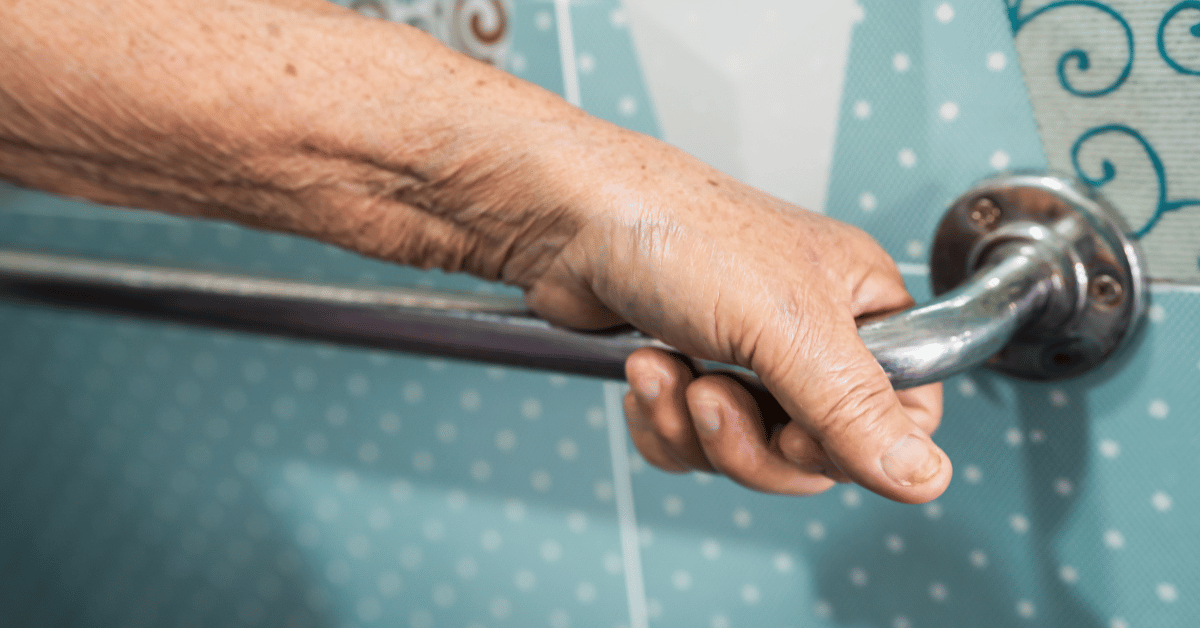
Creating accessible spaces is more than a legal checkbox; it’s a practical requirement that impacts daily functionality, especially in homes and public areas. Handicap bar installation has become one of the primary services sought by homeowners, facility managers, and business owners looking to provide secure environments for those with limited mobility.
While the idea seems straightforward—install a grab bar and you’re done—this is far from the reality. Done incorrectly, it can create more harm than good. There are standards, placements, wall types, weight ratings, and user-specific needs that influence every step.
Whether it’s a residential bathroom or a commercial hallway, understanding what goes into the installation process can determine whether the outcome is reliable or a liability. Gulf Coast Installations is proud to offer ADA-compliant solutions along with services like TV installation and professional mounting throughout Naples and Ft. Myers, Florida. You can contact them at (239)-682-1077.
Let’s explore the practical side of handicap bar installation—from concept to compliance.
Why Handicap Bar Installation Should Never Be an Afterthought
Often, modifications for accessibility come only after a fall or injury occurs. Many residential upgrades happen reactively, rather than proactively. Handicap bar installation isn’t merely about convenience; it’s about personal safety, autonomy, and reducing risks.
A bathroom, for example, is one of the most accident-prone rooms. Wet floors, low toilets, and slick tubs all increase fall hazards. This is where a properly installed grab bar can prevent a disaster.
Neglecting to install these safety measures can expose a facility or property owner to liability, especially if it falls under ADA guidelines. It’s not enough to purchase a grab bar and mount it with drywall screws. Structural integrity, correct placement, and secure anchoring are essential.
Key Locations for Handicap Bar Installation
Each property is unique, but some key areas consistently require attention. Installing handicap bars in the right places can make a significant difference.
Installing without considering movement flow, height, and hand strength may compromise the support function. Below are standard locations where bars are commonly installed:
- Beside the toilet: Ideal for assisting with sitting and standing
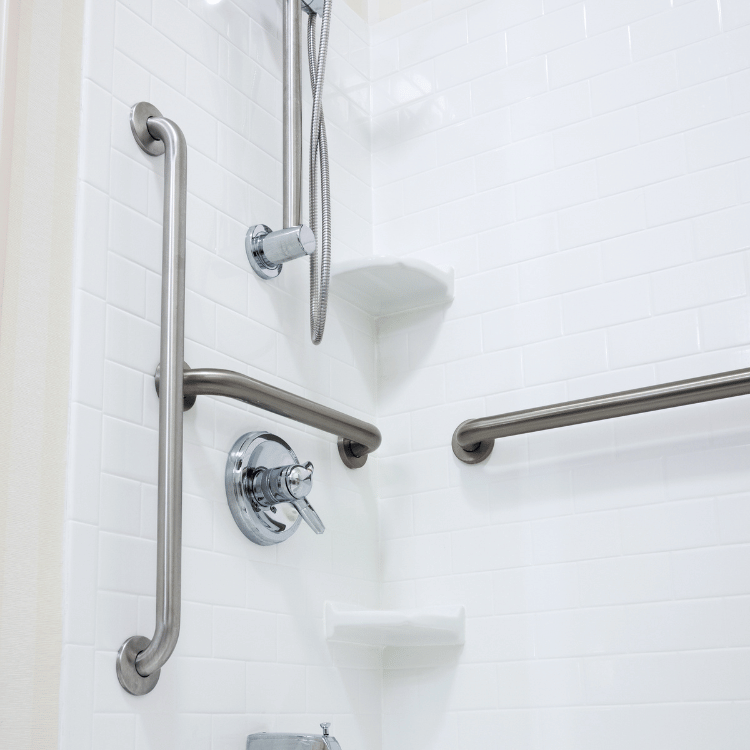
- Inside the shower or tub: Crucial for wet, slippery environments
- Near entrances/exits: Supports balance when stepping through doors
- Along hallways: Especially beneficial for longer interior walkways
- Next to beds: Offers stability during nighttime movement
These areas are not just chosen at random. They’re the high-risk zones where support is most needed.
Factors That Influence the Handicap Bar Installation Process
Proper installation involves more than drilling into a wall. Several variables come into play:
- Wall Structure: Is it tiled, concrete, drywall, or fiberglass? Each material requires specific fasteners.
- Stud Placement: Mounting into studs is always ideal; if studs are unavailable, reinforced anchors may be needed.
- Bar Length and Shape: Straight, wave, and corner bars all serve unique functions depending on the room layout.
- ADA Guidelines: Regulations govern spacing from the wall, weight capacity, and mounting height.
- User Specific Needs: A 5’2” individual may need a lower bar height than someone 6’1”. Customization is often necessary.
Without evaluating these factors, there’s no way to ensure the installation will hold up over time—or in a critical moment.
ADA Guidelines vs. Practical Use
The Americans with Disabilities Act (ADA) provides specifications for public and commercial facilities. These include:
- Grab bars must be between 33 and 36 inches above the finished floor.
- Bars must support a minimum of 250 pounds.
- Mounting must allow a space of 1.5 inches between the bar and the wall.
- Surfaces must be slip-resistant.
However, meeting the ADA standard isn’t always equivalent to meeting practical needs in a private home. It’s one thing to follow code; it’s another to tailor the solution to a person’s daily routine.
For instance, while the ADA may say 33 inches is acceptable, an elderly parent might need the bar closer to 30 inches. In a residential context, personalization often provides a safer solution than strict adherence to code.
Installation Methods: Secure Starts with Structure
The method of installation varies depending on wall types and location. Here are some of the common ways handicap bars are secured:
Stud Mounting
This method is preferred because it provides the most stability. Bars are mounted directly into wall studs using lag bolts, providing solid reinforcement.
- Requires stud-finder and measuring tools
- Works best with straight walls
- Most secure long-term
Hollow Wall Anchors
When studs aren’t available, heavy-duty wall anchors must be used. These come with reinforced grips and are often accompanied by mounting brackets.
- Essential for tiled or fiberglass surfaces
- Can hold up to 250-300 pounds if done correctly
- Requires precision drilling
Adhesive Grab Bars (Temporary Use)
While not recommended for long-term safety, suction-based or adhesive bars are sometimes used for temporary setups.
- Not ideal for full support
- Can fail under sudden pressure
- Should only be used in non-critical scenarios
Tools and Materials Required for Handicap Bar Installation
A professional installation involves specialized tools and materials to guarantee a safe outcome. These include:
- Power drill and driver
- Stud finder
- Level
- Measuring tape
- Tile drill bits (for tiled walls)
- Reinforced mounting hardware
- Silicone caulk (for sealing against moisture)
- Torque wrench (to ensure proper tension)
Using the wrong tool—or omitting a step—can compromise the whole installation. That’s why working with experienced technicians, like those from Gulf Coast Installations, often saves more time and cost than DIY attempts.
Handicap Bar Installation for Commercial Properties
In commercial properties like hotels, restaurants, and medical clinics, ADA compliance is mandatory—not optional. Handicap bar installation in these environments must adhere to specific federal standards and often requires documentation and inspection.
Areas that commonly require commercial installations include:
- Public restrooms
- Hospital and medical center rooms
- Employee breakrooms
- Locker rooms
- Accessible entrances and ramps
Moreover, business owners can’t simply install one bar and assume the building is compliant. The location, type of bar, and user flow must be reviewed holistically.
Cost Considerations and ROI
While it’s tempting to shop based on price, a low-cost installation might miss the mark on safety or durability.
The cost of a professional handicap bar installation varies by:
- Number of bars installed
- Type of material (stainless steel, chrome, powder-coated)
- Labor involved in reaching proper studs
- Wall material and preparation required
That said, the investment typically ranges between $100 to $300 per bar when installed professionally. In a commercial setting, the cost may be higher due to liability coverage and compliance audits.
Yet, what’s the ROI? Lower insurance claims, increased tenant satisfaction, and reduced legal exposure are just a few.
Questions to Ask Before Starting Handicap Bar Installation
Before booking any service or starting a DIY project, consider these essential questions:
- Is this location high-traffic or used regularly?
- What is the weight and mobility level of the intended user?
- Are there existing supports in the wall structure?
- Does this installation need to meet ADA requirements?
- Should I consider future upgrades or additional accessories (like shower seats)?
Answering these will help shape the scope, cost, and technical requirements of the installation.
Professional vs. DIY: When to Call in the Experts
Yes, there are countless videos and tutorials online. But knowing how to install a grab bar isn’t the same as knowing how to install it correctly.
Improper anchoring can cause the bar to detach from the wall during use—an incident that may result in severe injury or worse.
Signs you should consider professional installation:
- The walls are tiled, glass, or fiberglass
- Studs are not easily located
- Multiple bars are being installed
- The installation needs ADA documentation
- You want peace of mind backed by experience
Gulf Coast Installations provides services not just for TVs and entertainment systems—but also for handicap bar installation and home safety upgrades. Serving Naples and Ft. Myers, they’re a reliable partner in creating secure spaces.
FAQs
What’s the best height to install a grab bar?
Generally, 33 to 36 inches from the finished floor is standard, but this can vary based on the user’s height and needs.
Can grab bars be installed in fiberglass showers?
Yes, but they often require special mounting hardware and backing plates to avoid cracking the surface.
Do I need to install into a stud?
Installing into a stud is preferred for maximum support. If studs are not available, high-strength anchors are necessary.
Are there different shapes of handicap bars?
Yes. Straight, L-shaped, and U-shaped bars are all available and serve different purposes depending on the room layout.
Can I use suction grab bars instead?
Suction bars should only be used as a temporary measure. They’re not reliable for long-term safety or heavy support.
Get a Grip on Safety with Handicap Bar Installation
When safety meets precision, you get peace of mind—and that starts with expert handicap bar installation. Whether it’s for your loved one at home or the visitors at your business, the right installation creates spaces that welcome everyone.
Gulf Coast Installations proudly serves Naples and Ft. Myers, Florida with professional mounting, home accessibility solutions, and Samsung TV installation. No job is too small or too complex. Call (239)-682-1077 to book your service.